How do we go about growing confident readers? Let me share with you something about my kids. My boys are mountain bikers and one phrase I hear often in the mountain biking world is:
“Champions are made in the off season.”
During race season, everyone sees the results. They see the podium finishes, medals, trophies, and victories. But that isn’t when a champion is made. A champion is made months earlier through daily practice, consistency, strength training, and countless hours of preparation.
One thing I have learned over our 12 years of homeschooling is that growing confident readers happens in the off season.
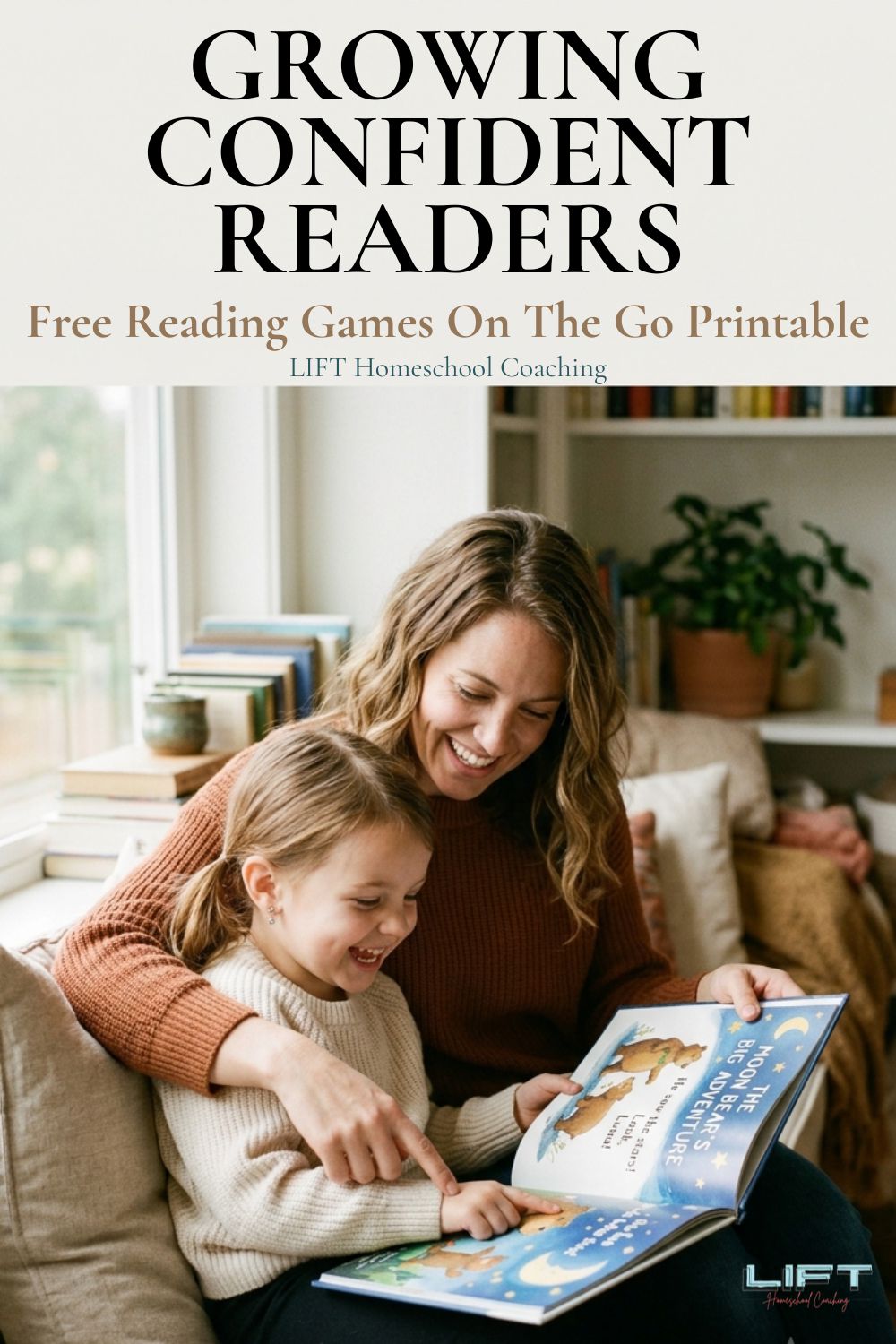
Many parents think reading begins when a child starts sounding out words on a page. I know I was one of those parents. What I didn’t realize was that reading often begins long before a child learns their first letter.
Before a child ever learns to read, they are building the foundation that reading will stand on.
- The child who spends years listening to stories is building reading muscles.
- The child who asks endless questions is building reading muscles.
- The child who sings songs, hears nursery rhymes, notices patterns, and plays with language is building reading muscles.
- The child who has a parent read aloud day after day is building reading muscles.
None of these activities look like reading, but they are all part of the off season.
When I first pulled my boys out of public school, I had no idea what I was doing. I bought curriculum and followed it to a T. What I wasn’t prepared for was when one of my sons struggled to remember letter sounds. I was stressed and convinced I had somehow ruined him.
Looking back, I can see that I was focused on race day.
I wanted the visible result.
I wanted to see him reading.
What I didn’t understand was that some of the most important work was happening before that moment.
As my boys have gotten older, I’ve realized that children don’t all learn the same way. They need opportunities to fall in love with stories and language before they tackle memorizing the alphabet.
Strong readers develop vocabulary, comprehension, imagination, attention, and background knowledge long before they ever read independently.
So what does the off season of reading actually look like?
Here are a few of the most important ways to build strong readers before formal reading instruction ever begins:
Read Aloud Every Day
If I could recommend just one thing, it would be this. Read picture books, chapter books, books above their reading level. Read books that rhyme.
When we read aloud, children are exposed to richer vocabulary, more complex sentence structures, and bigger ideas than they can access on their own.
Have Real Conversations
One of the greatest predictors of reading success is language exposure.
- Talk with your children.
- Ask questions.
- Listen to their ideas.
- Invite them to explain their thinking.
Reading is not just about recognizing words. Reading is about making meaning.
Tell Stories
Share stories from your childhood, and family. Retell books you’ve read together.
Children love stories, and storytelling teaches sequence, comprehension, memory, and communication. One game our family loved was creating stories together one sentence at a time. The stories became hilarious and created memories we still laugh about.
Read Poetry and Nursery Rhymes
Rhythm and rhyme help children hear the sounds within words, and before children learn to read, they learn to listen.
Poetry trains the ear and helps children recognize patterns in language. One of our favorite homeschool traditions was Poetry Tea Time. Even with five boys, it became something everyone looked forward to.
Sing Songs
Songs slow language down and help children hear sounds, patterns, and rhythms more clearly. Many of the same skills used in singing support later reading development. Some of the things my children memorized through music include states and capitals, The Living Christ, and even The Gettysburg Address.
Build Background Knowledge
Strong readers understand what they read because they know things about the world.
- Visit museums.
- Go on nature walks.
- Cook together.
- Explore.
- Discuss.
- Experience life together.
Every experience becomes knowledge that supports future reading comprehension.
Let Them See You Read
Children learn what we value by watching us, so if books are part of family life, reading feels normal. Let your children catch you reading. Not because you’re teaching a lesson, but because reading is simply part of who you are.
Cultivate Curiosity
Curiosity is the engine that drives reading. When children are curious, they want answers, and books become one way to find those answers. Encourage questions and slow down and wonder together. Not every question needs an immediate answer. Sometimes the wondering itself is valuable.
Trust the Process
This may be the hardest part. I know because I’ve lived it. I read aloud for years, and had books everywhere. We talked and explored and experienced life together. For a long time, I wondered if one of my sons would ever learn to read.
Eventually he did.
Champions are made in the off season, and so are readers. If you’re in the thick of it right now, I want you to know that you are doing an incredible job.
Keep making connections with your children, and creating positive experiences around books and reading.
You are helping to build reading muscles so trust the process. To help with this, I created this FREE Reading Games On The Go Printable for you. Take them anywhere and watch you children fall in love with language. If you want to track your reading, here is a fun way to do that.
In the full podcast episode, I share all 10 ways to strengthen reading skills before formal instruction, along with personal stories from our homeschool journey and practical ideas you can start using today.
You can listen to the full episode of LIFT Where You Stand wherever you get your podcasts.